Rugby 7s Rules: A Comprehensive Overview (Updated April 15, 2026)
Hong Kong’s Rugby Sevens enthusiastically resumed after a three-year pause, blending spirited fan traditions with necessary Covid-19 safety protocols and global team participation.
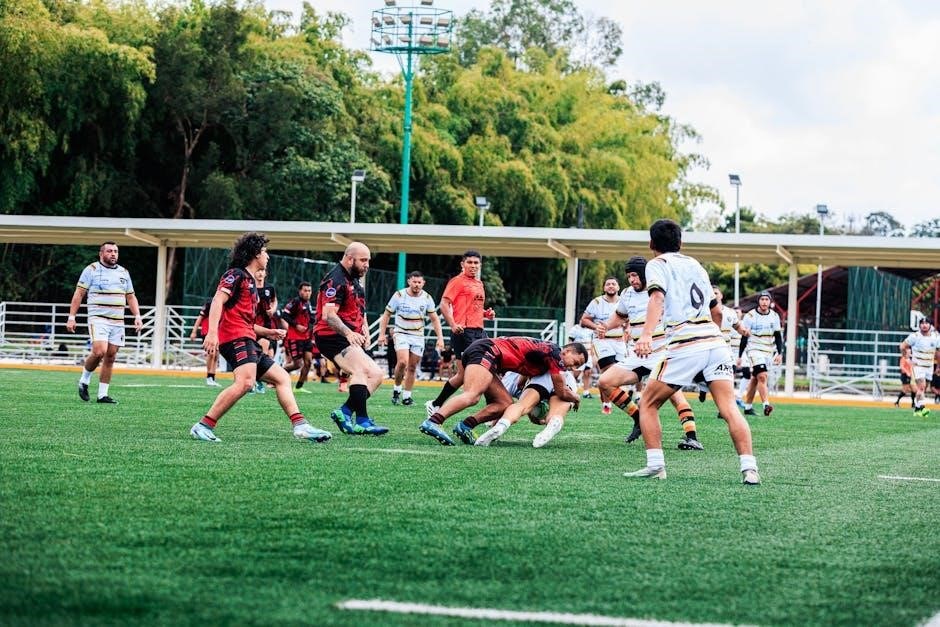
Rugby 7s is a fast-paced, globally celebrated variant of the traditional 15-a-side rugby union. The recent resurgence of events like the Hong Kong Rugby Sevens demonstrates the sport’s enduring appeal and enthusiastic fanbase. This condensed format emphasizes speed, agility, and open running play, creating a thrilling spectacle for players and spectators alike.
Following a three-year hiatus due to pandemic restrictions, the return of these tournaments signifies a renewed energy within the rugby community. Teams representing diverse nations converge, showcasing skill and sportsmanship. Understanding the specific rules governing Rugby 7s is crucial for appreciating its unique dynamics.
The Playing Field & Equipment
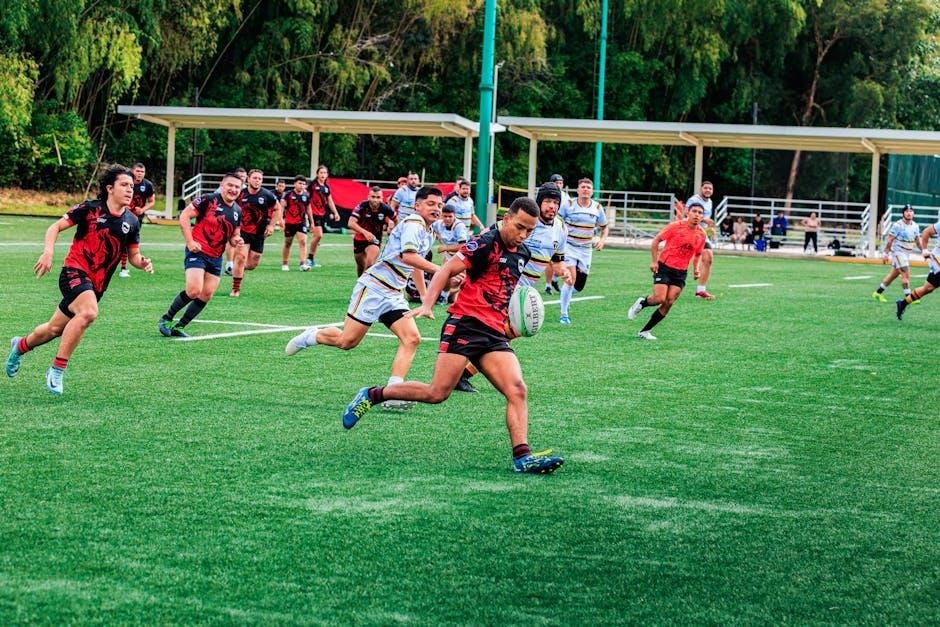
The vibrant atmosphere surrounding events like the Hong Kong Rugby Sevens highlights the importance of a well-maintained playing field. While specific dimensions will be detailed later, the field is noticeably smaller than a 15s pitch, contributing to the game’s increased tempo.
Essential equipment includes the rugby ball itself, adhering to specific weight and size regulations. Player attire prioritizes safety, with protective gear becoming increasingly common. The return of large-scale tournaments emphasizes the need for standardized equipment checks to ensure fair and safe competition for all participating teams.
Field Dimensions and Markings
The energy of events like the Hong Kong Sevens is contained within a specifically sized arena. A Rugby 7s field measures a maximum of 100 meters long and 70 meters wide. Key markings include the try-line, in-goal area, 22-meter lines, and halfway line.
These markings are crucial for enforcing offside rules and determining scoring opportunities. The smaller field size, compared to 15s rugby, directly impacts strategic play and emphasizes speed and agility. Accurate marking ensures fair play and a dynamic spectator experience during these exciting tournaments.
Ball Specifications
The heart of the game, the rugby ball used in 7s, differs slightly from its 15s counterpart. It’s generally smaller and lighter, facilitating quicker handling and passing – vital in the fast-paced 7s format. Official specifications dictate a length of 280-300mm and a circumference of 740-770mm.
Weight typically ranges between 410-460 grams. These specifications contribute to the increased aerial play and skillful offloads seen in 7s. Maintaining these standards ensures consistency and fairness across all levels of competition, from local tournaments to international championships.
Player Attire and Safety Gear
Returning to the pitch, players at the Hong Kong Sevens, and globally, adhere to specific attire regulations prioritizing both performance and safety. Standard kit includes a numbered jersey, shorts, socks, and appropriate footwear – typically molded studs for optimal grip.
Protective gear is also crucial. Scrum caps, mouthguards, and shoulder padding are commonly used to mitigate injury risk. While not always mandatory, these items are strongly encouraged. Regulations also cover permitted advertising and branding on uniforms, ensuring a professional and consistent appearance across teams.
Players and Team Composition
The dynamic nature of Rugby 7s necessitates a versatile team composition. Each squad consists of seven players on the field, with a maximum number of substitutes allowed – typically five, though specific tournament rules may vary.
Unlike the specialized roles in 15s rugby, 7s players require a broader skillset, capable of both attacking and defending effectively. Team strategies often revolve around exploiting mismatches and utilizing players’ adaptability. The Hong Kong Sevens showcased diverse national teams, highlighting varied approaches to player selection and tactical deployment.
Team Size and Substitutions
A Rugby 7s team actively competes with seven players on the field during gameplay. Tournament regulations generally permit a maximum of five substitutes per team, providing tactical flexibility throughout the match.
Substitutions are typically unlimited, allowing coaches to manage player fatigue and respond to evolving game situations. The recent Hong Kong Rugby Sevens demonstrated strategic use of substitutions, with teams frequently rotating players to maintain intensity. Understanding substitution rules is crucial for effective team management and maximizing performance during the fast-paced action.
Designated Positions (Though Fluid)
While Rugby 7s emphasizes versatility, players often gravitate towards roles. Forwards typically focus on contesting rucks and mauls, providing physical presence. Backs prioritize speed and agility, exploiting space for scoring opportunities. However, positional rigidity is minimal.
The Hong Kong Sevens highlighted this fluidity, with players seamlessly transitioning between roles based on game demands. A strong work ethic and adaptability are paramount, as players must contribute across all facets of the game. Successful teams demonstrate players comfortable fulfilling multiple functions.
Captain’s Role and Responsibilities
The Rugby 7s captain holds significant on-field authority, acting as a crucial link between the team and the referee. They are responsible for interpreting rules, managing game strategy, and motivating players throughout the fast-paced match.
The recent Hong Kong Sevens showcased captains actively engaging with officials, seeking clarification and ensuring fair play. Beyond tactical decisions, they embody team spirit and sportsmanship, setting the tone for conduct. Effective communication and composure under pressure are vital qualities for a successful 7s captain.
Game Duration and Scoring
Rugby 7s matches are renowned for their brevity and explosive scoring opportunities. A standard match consists of two seven-minute halves, separated by a short halftime break. Sudden death overtime periods are implemented to resolve ties, adding to the dramatic tension.
The recent Hong Kong Rugby Sevens highlighted the importance of every possession. Scoring primarily occurs through “tries,” worth five points, achieved by grounding the ball in the opponent’s in-goal area. Conversions, penalty kicks, and drop goals contribute additional points, demanding versatile skillsets.
Match Length and Halftime
A Rugby 7s match is a fast-paced affair, structured around two halves of seven minutes each. This condensed timeframe necessitates immediate intensity and strategic decision-making from players. The clock doesn’t stop for minor stoppages, amplifying the pressure to maintain possession and capitalize on opportunities.
Halftime provides a brief respite – typically a one-to-two minute interval – for teams to regroup, adjust tactics, and receive coaching instructions. The Hong Kong Sevens demonstrated how crucial these short breaks are for maintaining momentum and preparing for the decisive second half.
Try – The Primary Scoring Method
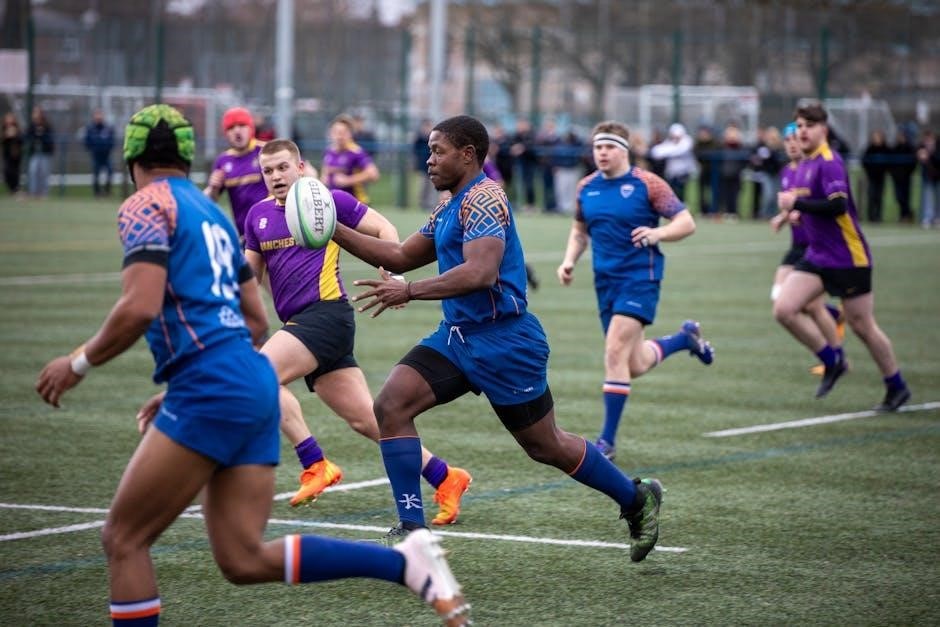
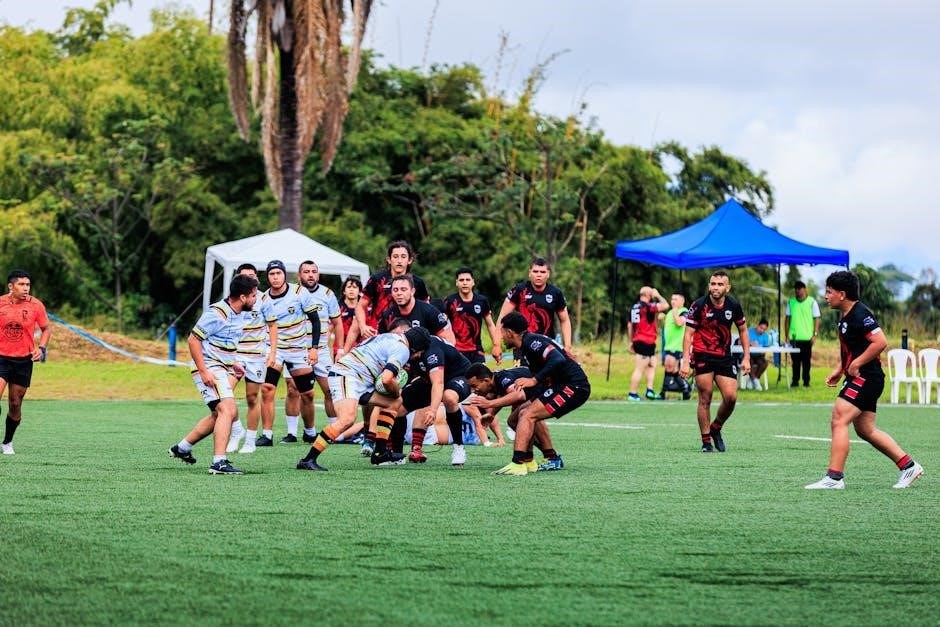
The ‘try’ remains the cornerstone of scoring in Rugby 7s, mirroring its importance in the 15s game. A try is awarded when a player grounds the ball in the opponent’s in-goal area. This requires downward pressure with the hand, arm, or front of the body – from waist to neck.
Given the smaller field and fewer players, tries are frequently seen, contributing to higher overall scores. The enthusiastic crowds at events like the Hong Kong Rugby Sevens celebrate each try with immense fervor, recognizing it as the most valuable play.
Conversion – After a Try
Following a try, the scoring team is granted a conversion attempt. This involves a place kick taken from a point on the field in line with where the try was scored. The kick must clear the crossbar and uprights to be successful, adding two points to the try’s five.
The angle of the conversion kick is crucial, becoming more challenging the further out from the posts the try was scored. Successful conversions, like the tries themselves, are met with cheers from fans enjoying events such as the Hong Kong Rugby Sevens.
Penalty Kick – Awarded for Infractions
Penalty kicks are awarded against a team committing infringements, offering the opposing team a scoring opportunity. The kick can be taken from the spot of the offense, allowing a direct attempt at goal for three points. Alternatively, the team can opt for a kick to touch, gaining territorial advantage.
Strategic decisions surrounding penalty kicks are vital, mirroring the tactical considerations seen at events like the Hong Kong Rugby Sevens, where fans witness both point-scoring attempts and clever field positioning.
Kick-Off and Restarting Play
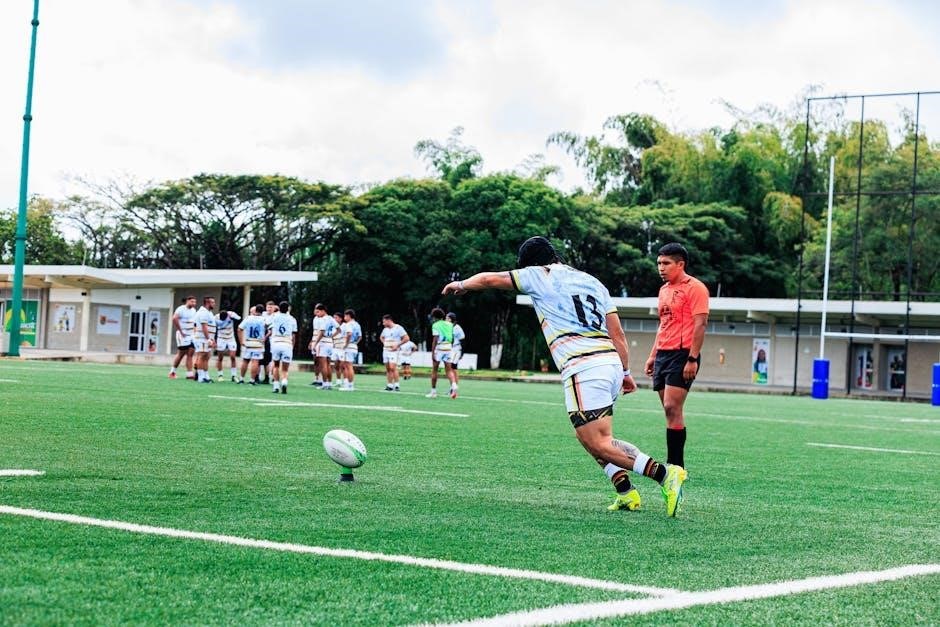
Play initiates with a drop kick from the center of the field, launching the game into action. Following a try, play restarts with a drop-out – a kick from anywhere behind the try-scoring team’s goal line. This differs from a standard kick-off, aiming for distance and strategic field position.
The vibrant atmosphere of events like the Hong Kong Rugby Sevens highlights the importance of these restarts, often leading to fast-paced attacks and exciting counter-plays as teams battle for dominance.
Kick-Off Procedures
The match begins with a drop kick taken from the center of the field. Players must be a minimum of 10 meters back from the ball until it’s kicked, creating space and preventing immediate charges. The kicking team cannot run towards the ball before it’s kicked, maintaining a fair start to play.
As seen at events like the Hong Kong Rugby Sevens, a well-executed kick-off can immediately put pressure on the receiving team, setting the tone for a dynamic and competitive match.
Drop-Outs – After a Try or Ball Going Into Touch-In-Goal
Following a try being scored, or when the ball is grounded in the try-scoring area by the defending team (resulting in a touch-in-goal), play restarts with a drop-out. This kick is taken from anywhere on the 22-meter line.
Similar to the kick-off, opposing players must remain 10 meters away until the ball is in play. The drop-out provides a strategic opportunity for the defending team to regain possession and territory, mirroring the energetic restarts witnessed at tournaments like the Hong Kong Sevens.
Core Gameplay Rules
The essence of Rugby 7s lies in its fast-paced, open play. Fundamental rules govern how the game unfolds, demanding skillful handling and dynamic movement. Passing must always be lateral or backwards; a forward pass results in a scrum for the opposing team. Tackling, while permitted, must be below the shoulder for safety.
Contesting for possession occurs through rucks and mauls, while strict offside lines dictate player positioning. These core principles, showcased at events like the Hong Kong Sevens, create a thrilling spectacle.
Passing and Handling – Forward Pass Rule
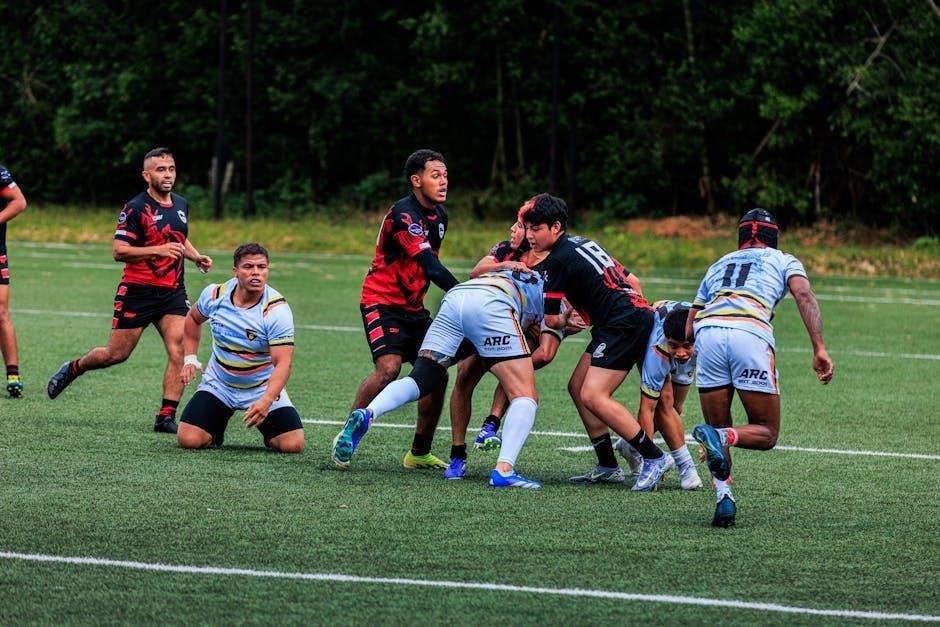
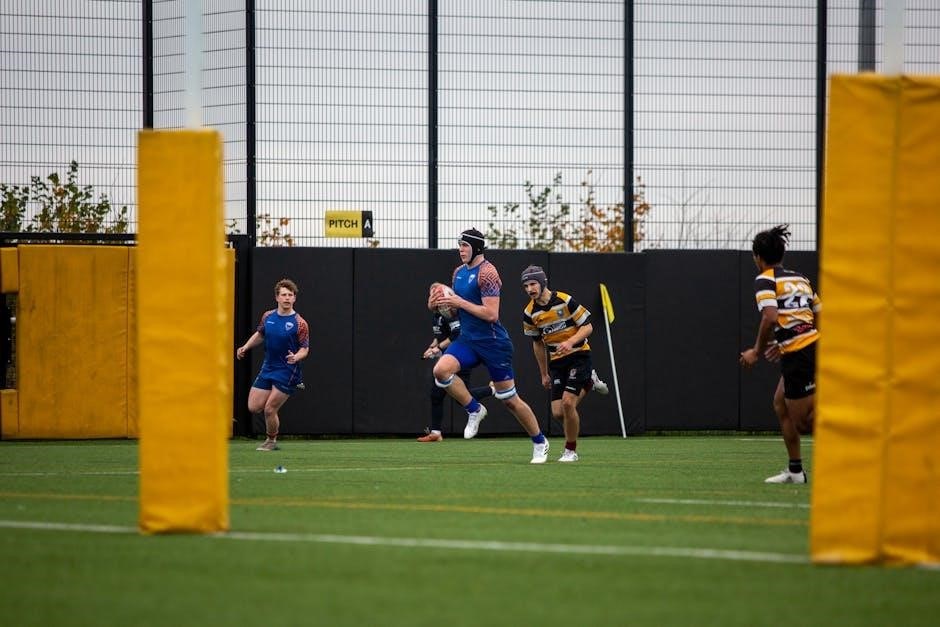
A cornerstone of Rugby 7s is the strict enforcement of the backward passing rule. Players can only pass the ball laterally or backwards, maintaining the flow of play towards their own try line. Any pass traveling forward is immediately penalized, resulting in a scrum awarded to the non-offending team.
This rule encourages creative running lines and support play, vital for success, as demonstrated by teams at the Hong Kong Sevens. Skillful handling and accurate passing are paramount in this dynamic game.
Tackling – Safe and Legal Techniques
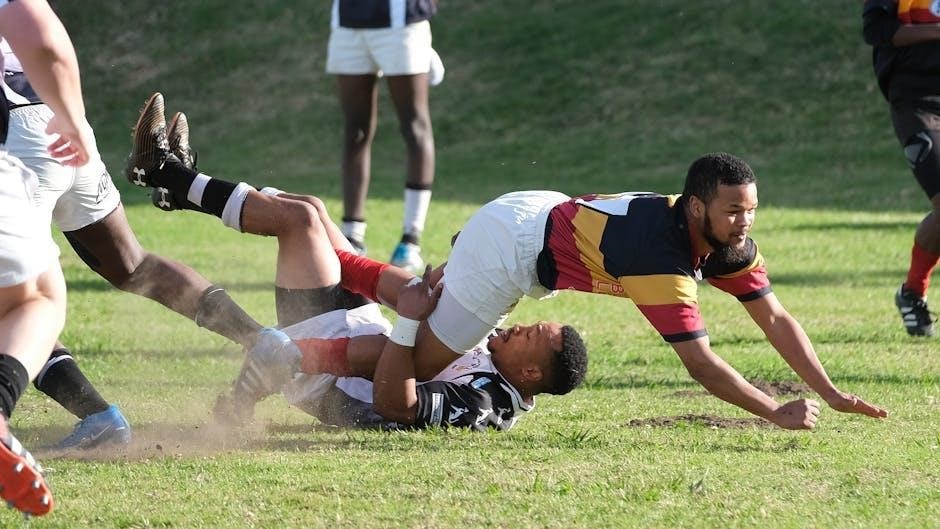
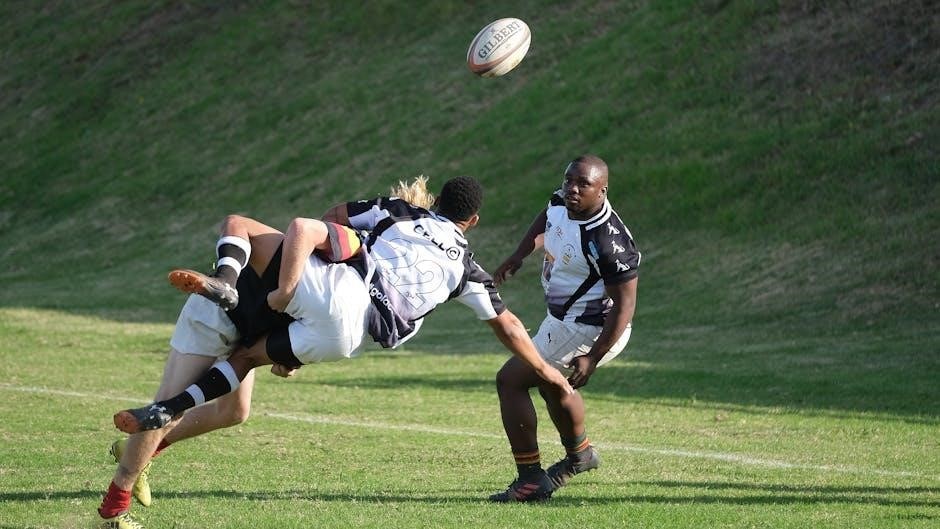
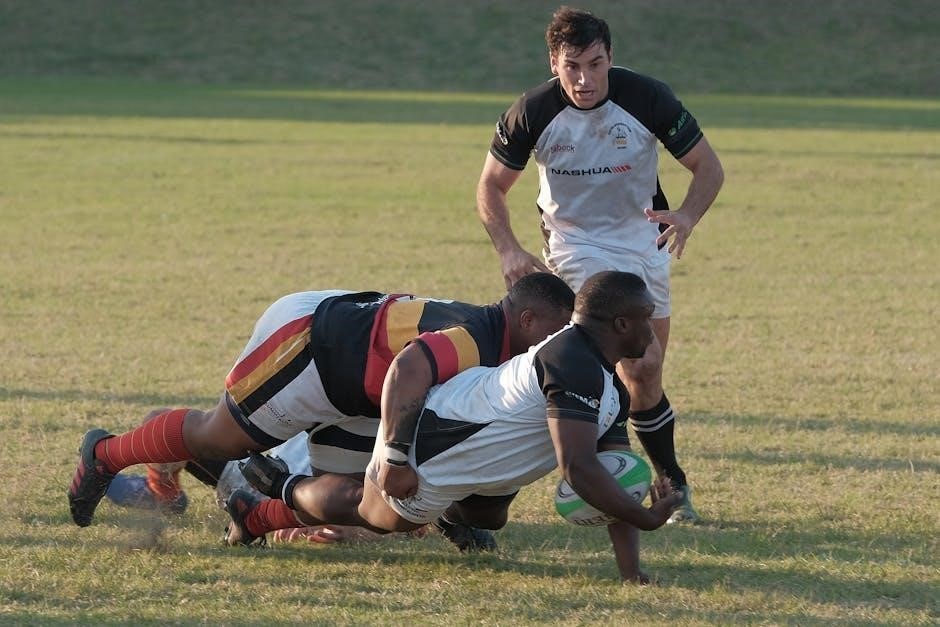
Safe and effective tackling is crucial in Rugby 7s, but must adhere to strict guidelines. Tacklers must attempt to wrap their arms around the ball carrier, bringing them to the ground. Dangerous tackles – high tackles above the shoulder line, spear tackles, or tackling without attempting to wrap – are penalized severely.
The focus, even amidst the excitement of events like the Hong Kong Sevens, remains on player safety. Referees actively monitor tackles, issuing penalties or cards for dangerous play to protect all participants.
Ruck and Maul – Contesting Possession
Rucks and mauls are dynamic phases of play in Rugby 7s, forming after a tackle or when players remain on their feet contesting possession. Players must bind onto the ball carrier or a teammate, driving forward legally.
Entering a ruck or maul from the side, or collapsing it intentionally, results in a penalty. The spirit of competition, as seen at events like the Hong Kong Sevens, is balanced with the need for safe and fair contest for the ball, governed by strict refereeing.
Offside Rules – Key Considerations
Offside rules in Rugby 7s are crucial, demanding players remain behind the ball when advancing towards the opponent’s try line. A player is offside if ahead of a teammate who last played the ball.
This rule encourages dynamic attacking play, similar to the fast-paced action witnessed at the Hong Kong Rugby Sevens. Offside infringements lead to penalties, granting the opposing team field position or scoring opportunities, emphasizing strategic positioning and awareness.
Fouls and Penalties
Infringements in Rugby 7s result in penalties awarded to the non-offending team, mirroring the strict enforcement seen at events like the Hong Kong Rugby Sevens. Common fouls include tackling above the shoulder, intentional knock-ons, and offside play.
Penalties offer options like a penalty kick at goal, a tap-and-go restart, or a kick for touch to gain territory. More serious offenses warrant yellow cards (temporary suspension) or red cards (permanent expulsion), impacting team dynamics significantly.
Common Infringements and Penalties
Frequently observed fouls in Rugby 7s, as witnessed at events like the Hong Kong Sevens, include high tackles – those above the shoulder line – and deliberate knock-ons, immediately halting play. Offside violations are also common, requiring players to maintain correct positioning relative to the ball.
Penalties for these infractions range from a simple penalty kick at goal to a tap penalty, allowing a quick restart. Repeated or severe infringements can lead to escalating consequences, including temporary or permanent player removal.
Yellow Card (Temporary Suspension)
A yellow card in Rugby 7s signifies a temporary suspension, typically lasting for two minutes. This penalty is issued for cynical fouls, repeated infringements, or dangerous play, impacting team dynamics significantly. The penalized player must leave the field immediately, reducing the team to six players.
Strategic implications are substantial; teams must adapt quickly to cover the lost player. The Hong Kong Sevens, known for its fast pace, highlights how crucial it is to avoid these suspensions, as even a short period down a player can be decisive.
Red Card (Permanent Expulsion)
A red card in Rugby 7s results in the immediate and permanent expulsion of a player from the match. This severe penalty is reserved for the most serious offenses, including dangerous tackling, intentional foul play, or repeated yellow card offenses. The team continues with only six players for the remainder of the game.
The impact is devastating, particularly in a fast-paced tournament like the Hong Kong Sevens. Maintaining discipline is paramount, as a red card effectively cripples a team’s chances of success, demanding exceptional resilience.
Specific 7s Rule Variations from 15s
Rugby 7s diverges significantly from the 15-a-side game in several key areas. Scrum numbers are reduced to three players per side, impacting contestable scrums. Kick-to-touch rules are strategically different, often prioritizing territorial gain over lengthy kicking duels.
Furthermore, strict time limits are enforced for scrums and lineouts, accelerating play and minimizing stoppages. These adaptations enhance the speed and fluidity characteristic of 7s, demanding exceptional fitness and quick decision-making from players, as seen at events like the Hong Kong Sevens.
Reduced Scrum Numbers
A defining characteristic of Rugby 7s is the diminished scrum size. Unlike the eight-player scrums in the 15s format, 7s utilizes only three players per team. This reduction fundamentally alters the scrum’s dynamics, decreasing its emphasis as a platform for sustained forward play.
The smaller scrum is quicker to set, reducing downtime, and relies more on technique and individual strength than massed power. This change contributes to the faster pace and open running style prevalent in the 7s game, as observed during the recent Hong Kong Rugby Sevens.
Kick-to-Touch Rules – Strategic Implications
Strategic kicking in Rugby 7s differs significantly from the 15s game, largely due to the limited territorial gain offered. While a kick to touch is permitted, the receiving team gains possession where the ball is kicked from, rather than the spot of landing.
This rule encourages teams to retain possession and build phases of play, minimizing risky kicks that could surrender valuable territory. The Hong Kong Sevens showcased teams prioritizing attacking runs over lengthy kicking duels, highlighting this tactical shift.
Time Restrictions for Scrums and Lineouts
Speed of play is paramount in Rugby 7s, and this is reflected in strict time limits for set pieces. Scrums are uncontested, focusing on quick ball delivery – typically within three seconds. Lineouts are similarly expedited, with a five-second limit for throwing the ball in.
These restrictions minimize stoppages and maintain the game’s fast-paced, open nature, a key element observed at events like the Hong Kong Rugby Sevens. The emphasis is on continuous action, rather than prolonged set-piece battles.